


Advancing the frontiers of controlling quantum dynamics phenomena with tailored photonic reagents.

Molecular control in the quantum realm.
Based in the Frick Chemistry Laboratory at Princeton University, the Rabitz Group’s fundamental research includes explorations of why quantum control can work and determination of how it works in order to reveal the mechanism by which quantum dynamics is manipulated. The lab’s strong focus on chemical reaction control at the quantum mechanical level motivates alteration of the outcome of evolving molecular quantum dynamics phenomena (dictated by Schrödinger’s equation) often by applying a shaped laser pulse referred to as a photonic reagent.
Recent publications.
-
Efficient Hamiltonian encoding algorithms for extracting quantum control mechanism as interfering pathway amplitudes in the Dyson series
Publication Abstract
Hamiltonian encoding is a methodology for revealing the mechanism behind the dynamics governing controlled quantum systems. In this paper, following Mitra and Rabitz [Phys. Rev. A 67, 033407 (2003)], we define mechanism via pathways of eigenstates that describe the evolution of the system, where each pathway is associated with a complex-valued amplitude corresponding to a term in the Dyson series. The evolution of the system is determined by the constructive and destructive interference of these pathway amplitudes. Pathways with similar attributes can be grouped together into pathway classes. The amplitudes of pathway classes are computed by modulating the Hamiltonian matrix elements and decoding the subsequent evolution of the system rather than by direct computation of the individual terms in the Dyson series. The original implementation of Hamiltonian encoding was computationally intensive and became prohibitively expensive in large quantum systems. This paper presents two new encoding algorithms that calculate the amplitudes of pathway classes by using techniques from graph theory and algebraic topology to exploit patterns in the set of allowed transitions, greatly reducing the number of matrix elements that need to be modulated. These new algorithms provide an exponential decrease in both computation time and memory utilization with respect to the Hilbert space dimension of the system. To demonstrate the use of these techniques, they are applied to two illustrative state-to-state transition problems.
-
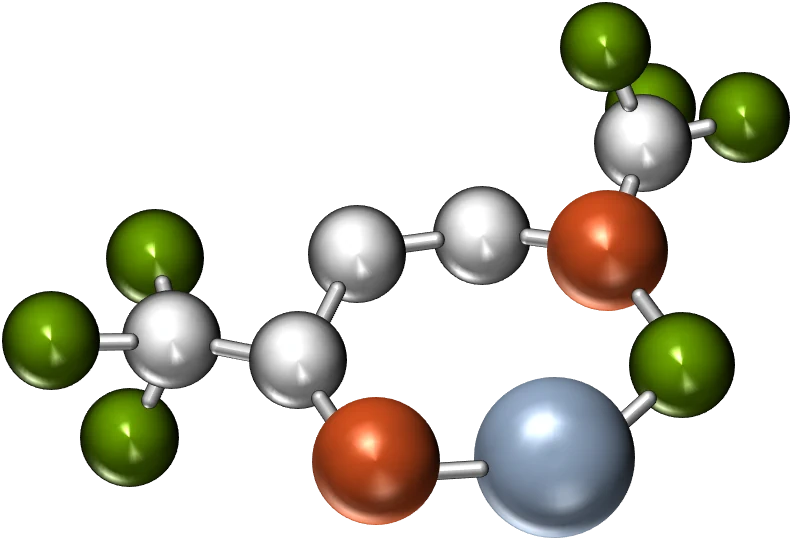
Ultrafast control of the LnF+/LnO+ ratio from Ln (hfac) 3
Phys. Chem. Chem. Phys., 2024, 26, 15850-15855
Publication Abstract
The photo-induced dissociative ionization of lanthanide complexes Ln(hfac)3 (Ln = Pr, Er, Yb) is studied using ultrafast shaped laser pulses in a time-of-flight (TOF) mass spectrometry setup. Various fluorine and Ln-containing mass fragments were observed, which can be interpreted by the photo-fragmentation mechanistic pathway involving C–C bond rotation processes proposed previously. A set of experiments used pulse shaping guided by closed-loop feedback control to identify pulses that optimize the ratio of LnF+/LnO+. In agreement with previous studies in which very little LnO+ was observed, broad pulses were found to maximize the LnF+/LnO+ ratio, which involves metal–ligand bond-breaking followed by bond rotation and bond rearrangement. In contrast, a transform limited (TL) pulse favored the formation of LnO+. Finally, the recently developed experimental control pulse slicing (CPS) technique was applied to elucidate the dynamics induced by fields that either maximize or minimize the LnF+/LnO+ ratio, which also indicates that longer laser pulses facilitate LnF+ formation during the C–C bond rotation dissociative-ionization process.
-
Co-localization of surface-bound molecules and shallow luminescent centers utilizing Forster resonant excitation transfer driven photochemical reactions
Publication Abstract
There is a great promise in utilizing shallow paramagnetic luminescent defects such as NVcenters in conjunction with spin-labeled receptor proteins in biological and chemical sensing. One of the major challenges is the accurate and efficient placement of the receptor protein in the close vicinity of the luminescent center deposited within the host material. We analyze the FRET-driven functionalization of the surface, where the emission of the luminescent center serves as a donor of the excitation, and the photolabile group on the surface as the acceptor. The efficiency of biological detection with a combination of spin-labeled protein receptor and a shallow NV- center is considered.
-
Characterization and Calibration of Quantum Processors using Machine Learning
APS March Meeting 2024, Abstract: DD03.00004
Publication Abstract
The effort required for quantum system control, particularly in terms of measurements during calibration, needs to be low enough to compensate for system parameter changes or fast enough to allow for periodic re-calibration. Complete system characterization can provide accurate numerical models for gate calibration. On the other hand, model-free learning control, although costly and laborious, represents a data-driven calibration technique. As quantum systems increase in size, these methods become more measurement-intensive. Here, we use a technique to extract the quantum processor dynamics and map them to a known Hamiltonian and a neural network capturing the unknown dynamics. This combined approach, known as residual modeling, allows for a comprehensive representation of the experimentally observed dynamics with minimal effort. This characterization technique enables low-effort calibration of the closed-system model. Subsequently, a reinforcement-learning gate-calibration agent is equipped with the acquired model and initiated using a numerically derived guess. Such a low-resource approach could enable scaling up quantum processors calibrated by reinforcement learning agents and sidestep the looming bottleneck of quantum control.
-
Decoherence-Free Subspaces for Spontaneous Emission modeled by Continuous Spontaneous Localization
APS March Meeting 2024, Abstract: DD03.00003
Publication Abstract
Practical quantum information processing depends on long coherence times and fast and accurate quantum control. Understanding the boundaries of quantum system control is crucial to improving quantum processor design. One common challenge of quantum system control is the undetected spontaneous decay of excited states through spontaneous emission. The framework of continuous spontaneous localization can model spontaneous emission. Continuous spontaneous localization is a modification of quantum mechanics that addresses the measurement problem. It suggests that all particles have a constant and random localization process, which leads to an exponential suppression of superposition states with an increasing number of particles. This theory proposes that localization occurs continuously rather than due to a measurement or environmental interaction. In this study, we investigate the compatibility and realizability of decoherence-free subspaces to protect against spontaneous emission modeled by continuous spontaneous localization. Decoherence-free subspaces are quantum subspaces resistant to certain types of noise and decoherence, resulting in non-unitary dynamics due to system-bath couplings. By encoding quantum information in a decoherence-free subspace, the information can be protected from environmental disturbances and remain coherent for extended periods of time.
-
Decoherence-Free Subspaces Cannot Prevent the Collapse of Wave Functions
Publication Abstract
Efficacious quantum information processing relies on extended coherence and precise control. Investigating the limitations surrounding quantum processors is vital for their advancement. In their operation, one challenge is inadvertent wave function collapse. Decoherence-free subspaces, theoretically capable of mitigating specific non unitary dynamics, present a promising avenue. However, our study unveils their inability to safeguard against spontaneous wave function collapse. Thus, the spontaneous-collapse rate becomes a critical limiting factor for quantum systems’ physical coherence, restricting the options for maintaining coherence to active error correction.

Our team.
The Rabitz Group is led by Principal Investigator, Herschel Rabitz. Our research team comprises a group of exceptional post-doctoral fellows, research and visiting scholars, graduate students, and undergraduates.
Recent news.
-
Rabitz Group’s Lienhard headed for Lindau Nobel Meeting.
-
Quantum Bootcamp Part VI: What I’ve learned.
-
Postdoc Kanevche heads up groundbreaking microscope project to ID chemical species.
-
Rabitz, Jonikas awarded $3.4M Moore Foundation Grant.
-
Quantum Bootcamp Part V: Quantum Optics, illuminating the invisible.